

Industrial bolt Selection Guide: How to Choose the Right Bolt for Different Applications
Selecting the correct Bolt is a critical decision for industrial equipment manufacturers, engineering companies, and purchasing teams. Although bolts are small mechanical components, their performance directly affects equipment safety, structural stability, maintenance costs, and long-term operating reliability.
Different industrial applications require different Bolt solutions. A fastener used in construction machinery may require high strength and vibration resistance, while a Bolt used in chemical equipment may require superior corrosion resistance. Choosing the wrong product can lead to loosening, fatigue failure, corrosion damage, and unexpected downtime.
This Industrial Bolt selection guide explains the key factors buyers should consider, including material selection, mechanical grades, application requirements, standards, installation conditions, and supplier evaluation.
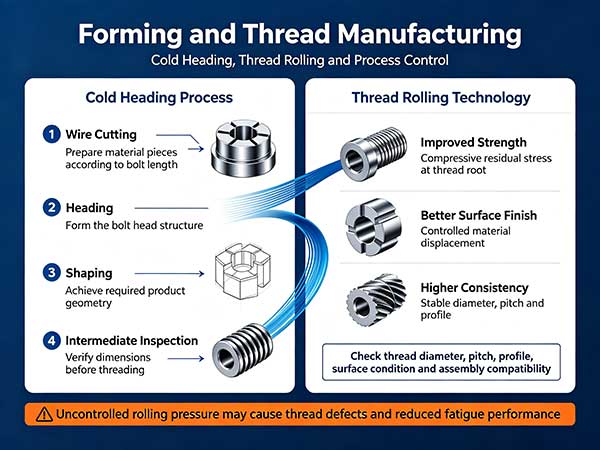
Industrial equipment operates under complex conditions, including vibration, heavy loads, temperature changes, and environmental exposure. The Bolt is responsible for maintaining a secure connection between components and ensuring the stability of the entire structure.
A properly selected Bolt can provide:
Reliable Mechanical connections
Improved equipment safety
Longer service life
Reduced maintenance requirements
Better operational efficiency
An unsuitable Bolt may cause:
Connection loosening
Thread damage
Fatigue cracking
Corrosion failure
Equipment downtime
Industrial Bolts are available in many designs, materials, and specifications. Selecting the correct type depends on the application requirements and operating environment.
| Bolt Type | Main Characteristics | Typical Applications |
|---|---|---|
| Hex bolt | Common industrial fastening solution | Machinery, structures, equipment assembly |
| high strength Bolt | Designed for high load conditions | Heavy machinery and structural engineering |
| Stainless Steel Bolt | Excellent corrosion resistance | Outdoor and chemical environments |
| Custom Bolt | Manufactured according to special requirements | Special equipment and engineering projects |
Selecting the correct Bolt requires a complete evaluation of mechanical, environmental, and operational requirements.
The first step in Bolt selection is understanding the forces applied to the fastening connection. Different applications create different stress conditions.
Common loads include:
Tensile loads
Shear forces
Impact loads
Vibration stress
Cyclic fatigue loads
For heavy-duty equipment, High Strength Bolts are often required to maintain connection stability under continuous stress.
Material selection determines the Bolt’s strength, corrosion resistance, and service life. Different environments require different material solutions.
| Material | Advantages | Application Areas |
|---|---|---|
| Carbon Steel | Good strength and cost efficiency | General industrial equipment |
| Alloy Steel | Higher strength performance | Heavy machinery and high-load applications |
| Stainless Steel | Strong corrosion resistance | Marine, chemical, outdoor applications |
The working environment has a significant impact on Bolt performance. Before selecting a Bolt, buyers should analyze exposure conditions.
| Environment | Main Challenge | Selection Focus |
|---|---|---|
| Outdoor Applications | Moisture and weather exposure | Corrosion resistance |
| Chemical Industry | Corrosive substances | Material compatibility |
| Heavy Machinery | Vibration and impact | Strength and fatigue resistance |
| High Temperature Equipment | Thermal stress | Temperature-resistant materials |
Bolt grades define mechanical performance and help engineers select suitable fasteners according to load requirements.
Standard strength Bolts are suitable for general applications where moderate mechanical performance is required.
Typical uses include:
General equipment assembly
Light industrial structures
Standard mechanical connections
High strength Bolts are designed for applications requiring higher load capacity and improved resistance to mechanical stress.
Common applications include:
Construction machinery
Mining equipment
Heavy industrial systems
Large Structural connections
Industrial buyers must confirm required standards before purchasing Bolts. Different markets and industries may follow different specification systems.
Common standards include:
DIN standards
ANSI standards
ISO standards
GB standards
Correct standard selection ensures compatibility, easier installation, and reliable performance.
Selecting the correct Bolt size is essential for ensuring fastening reliability and structural safety. A Bolt that is too small may not provide sufficient load capacity, while an oversized Bolt may increase cost and create unnecessary design limitations.
Engineers and purchasing teams should evaluate Bolt dimensions based on equipment design, connection requirements, and operating conditions.
| Dimension Parameter | Importance |
|---|---|
| Bolt Diameter | Determines load capacity and connection strength |
| Bolt Length | Affects installation and clamPing performance |
| Thread Pitch | Influences tightening performance and load distribution |
| Thread Type | Ensures compatibility with mating components |
| Head Design | Affects installation method and tool requirements |
Industrial markets commonly use both metric and imperial Bolt systems. Buyers should confirm measurement standards before ordering to avoid compatibility problems.
Important considerations include:
Measurement system requirements
Thread specification
Application standards
Equipment manufacturer requirements
Even a high-quality Bolt can fail if installation procedures are incorrect. Proper tightening ensures that the fastening connection achieves the designed performance.
Torque control determines the preload force generated during Bolt installation. Proper preload keeps connected components tightly secured and reduces the risk of loosening.
Incorrect torque may cause:
Insufficient clamping force
Connection movement
Thread damage
Bolt fatigue failure
| Installation Method | Application Characteristics |
|---|---|
| Torque Tightening | Common method for industrial assembly |
| Torque-Angle Tightening | Provides improved tightening accuracy |
| Hydraulic Tensioning | Used for large industrial Bolts |
| Manual Tightening | Suitable for general applications |
Different industries have different fastening requirements. Understanding application conditions helps buyers choose the most suitable Bolt solution.
Construction projects require Bolts that provide structural stability and long-term reliability. Structural connections must withstand environmental exposure, static loads, and dynamic forces.
Typical applications include:
Steel structures
Bridges
Industrial buildings
Infrastructure projects
Key requirements:
High strength performance
Reliable preload retention
Weather resistance
Long service life
Automotive manufacturing requires Bolts with precise dimensions, stable mechanical properties, and consistent production quality.
Applications include:
Vehicle components
Engine systems
Chassis assemblies
Industrial automotive equipment
Important requirements:
High fatigue resistance
Dimensional accuracy
Weight optimization
Production consistency
Mining equipment operates under extreme conditions involving heavy loads, vibration, impact, and dust exposure. Bolts used in these systems require excellent mechanical performance.
Common applications:
Excavators
Loaders
Mining machinery
Heavy transport equipment
Selection priorities include:
High tensile strength
Impact resistance
Fatigue performance
Reliable installation
Power generation, renewable energy, and industrial energy systems require fastening solutions that can maintain performance over long operating periods.
Applications include:
Wind power equipment
Solar mounting systems
Power infrastructure
Industrial energy facilities
Understanding common Bolt failure causes helps engineers prevent equipment problems and improve fastening reliability.
| Failure Mode | Main Cause | Prevention Method |
|---|---|---|
| Loosening | Vibration or insufficient preload | Use correct tightening methods |
| Fatigue Failure | Repeated stress cycles | Select suitable strength grade |
| Corrosion Damage | Environmental exposure | Choose proper materials and coatings |
| Thread Damage | Incorrect installation | Control torque and assembly process |
| Overloading | Incorrect Bolt selection | Match Bolt capacity with application requirements |
Quality inspection ensures that industrial Bolts meet required performance standards before being installed in equipment.
Common inspection methods include:
Dimensional measurement
Thread inspection
Tensile testing
Hardness testing
Surface inspection
Material verification
For critical industrial applications, complete inspection records and material traceability help improve product reliability and quality management.
Choosing a reliable industrial Bolt supplier is an important step in ensuring fastening performance, product consistency, and long-term equipment reliability. A qualified supplier should provide not only high-quality products but also technical support, production capability, and quality assurance.
For industrial buyers, supplier evaluation should include manufacturing experience, inspection capability, customization ability, and delivery reliability.
| Evaluation Factor | Buyer Consideration |
|---|---|
| Manufacturing Experience | Evaluate experience in producing industrial Bolt solutions |
| Production Capability | Confirm equipment, capacity, and process stability |
| Quality Management | Review inspection procedures and quality control systems |
| Customization Support | Check ability to manufacture according to drawings |
| Delivery Performance | Ensure stable production and supply schedules |
Standard Bolts may not always satisfy complex engineering applications. Custom Bolt manufacturing allows companies to develop fastening solutions based on specific equipment structures, operating environments, and performance requirements.
Special Bolt dimensions
Custom thread specifications
Special material selection
Customized head designs
Special surface treatments
Application-specific strength requirements
| Industry | Customization Requirement |
|---|---|
| Heavy Machinery | High-load and vibration-resistant fastening solutions |
| Automotive Manufacturing | Precision dimensions and consistent performance |
| Energy Equipment | Long-term reliability under environmental stress |
| Special Engineering Projects | Non-standard designs and materials |
The total cost of purchasing industrial Bolts depends on more than the initial product price. Buyers should consider quality, service life, maintenance requirements, and supply stability.
| Cost Element | Impact on Total Value |
|---|---|
| Material Quality | Determines durability and application performance |
| Manufacturing Accuracy | Affects installation efficiency and reliability |
| Surface Protection | Influences corrosion resistance and service life |
| Inspection Standards | Reduces failure risks |
| Supplier Reliability | Supports stable project schedules |
Selecting the cheapest Bolt option may increase long-term costs if the product has unstable quality or insufficient performance. Fastener failures can lead to equipment repairs, production interruptions, and additional labor costs.
A professional procurement strategy should focus on overall value, including product reliability, technical support, and supplier cooperation capability.
Before placing an order, buyers should confirm the following technical information:
✔ Bolt type and design requirements
✔ Material specification
✔ Strength grade
✔ Size and thread information
✔ Required manufacturing standard
✔ Surface treatment requirements
✔ Operating environment conditions
✔ Load and vibration requirements
✔ Inspection documentation requirements
✔ Delivery schedule
The correct Bolt should be selected based on load requirements, material compatibility, environmental conditions, strength grade, dimensions, and installation requirements.
Bolt service life is affected by material quality, mechanical loading, corrosion exposure, installation accuracy, surface treatment, and operating conditions.
Stainless Steel Bolts provide excellent corrosion resistance, but selection should still consider strength requirements, temperature conditions, and specific application environments.
Bolt loosening may occur due to vibration, insufficient preload, incorrect installation torque, or unsuitable fastener selection.
Yes. Professional suppliers can manufacture customized Bolts according to engineering drawings, material requirements, dimensions, and application specifications.
Industrial Bolts are essential components that maintain the safety and stability of machinery, structures, and equipment systems. Selecting the correct Bolt requires careful consideration of material, strength, size, environment, installation method, and supplier capability.
For construction, automotive, energy, mining, and heavy industrial applications, reliable Bolt solutions help reduce maintenance risks, improve equipment performance, and extend service life.
Working with an experienced Bolt Manufacturer allows companies to obtain consistent quality, customized solutions, and professional technical support. A correct Bolt selection strategy can significantly improve operational reliability and reduce long-term costs.
For industrial fastener products and customized Bolt solutions, visit:
Contact person: Mr.Ren
Phone:0086-13958324455
Customer service: +86-0574 88065928
Email: Sales@zjbzj.com
Fax: +0086-0574 88065656

official website
Copyright @ Ningbo yi teng construction machinery CO,LTDmainly engaged in Blade Bolts Series, Hexagon bolt, and Bucket teeth. Welcome to inquire!
SitemapThis website uses cookies to ensure you get the best experience on our website.
 Español
 Portugues
 Pусский
 Français
 Deutsch
 日本語
日本語 한국어
한국어 العربية
 हिन्दी



 WhatsApp
 Phone
Phone
Comment
(0)