
 Español
 Portugues
 Pусский
 Français
 Deutsch
 日本語
日本語 한국어
한국어 العربية
 हिन्दी
welding stud
A welding stud is a fastener designed to be permanently attached to a metal surface through a welding process. It is widely used in construction, manufacturing, automotive engineering, shipbuilding, electrical installations, and many other industrial applications. The main purpose of a welding stud is to create a strong threaded or unthreaded mounting point without requiring access to both sides of the base material. This makes it especially useful when working with thin sheets, structural steel, or enclosed assemblies.Welding studs are typically made from materials such as carbon steel, stainless steel, or aluminum, depending on the requirements of the application. Carbon steel studs are common in general fabrication because they offer good strength and cost-effectiveness. Stainless steel studs are preferred in environments where corrosion resistance is important, such as marine, chemical, or outdoor applications. Aluminum studs may be used when weight reduction is a priority. Some welding studs are also coated or plated to improve surface protection and performance.There are different types of welding studs, including threaded studs, unthreaded studs, and special-purpose studs with heads, flanges, or specific tip designs. Threaded welding studs are often used to support nuts, brackets, or other components that need to be secured after welding. Unthreaded studs can serve as locating pins, supports, or electrical contact points. The design of the stud often depends on the welding method being used and the final application.Welding studs are commonly installed using stud welding equipment, which applies heat and pressure to fuse the stud to the base metal. One of the most widely used methods is arc stud welding, in which an electric arc melts the end of the stud and the surface of the base material before they are pressed together. Another method is capacitor discharge stud welding, which is suitable for smaller studs and thinner materials. Both methods provide a fast and reliable connection with minimal distortion to the base metal.One of the major advantages of welding studs is efficiency. The installation process is quick, clean, and highly repeatable, allowing manufacturers to reduce labor time and improve production speed. In addition, stud welding creates a secure bond with excellent mechanical strength. Since the stud is attached directly to the surface, there is no need for drilling holes or using additional hardware in many cases. This helps preserve the integrity of the base material and reduces weak points in the structure.Welding studs are used in many applications such as fastening insulation, attaching cable supports, mounting panels, securing automotive parts, and assembling heavy equipment. Their versatility and reliability make them an important component in modern fabrication and assembly work. With proper material selection and correct welding technique, a welding stud can provide long-lasting performance in demanding environments.
Products
Category:
-
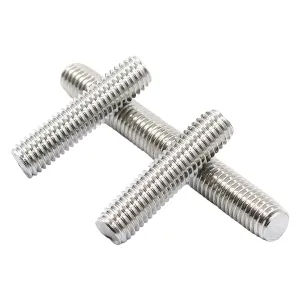
Studs b7
Category: Studs b7Browse number: 348Number:Release time: 2026-07-21 11:02:49Port:Port NINGBO Payment Terms:L/C,D/A,D/P,T/T -
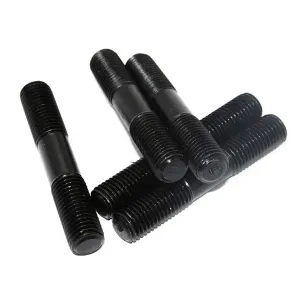
Studs b7
Category: Studs b7Browse number: 368Number:Release time: 2026-07-21 11:08:22Port:Port NINGBO Payment Terms:L/C,D/A,D/P,T/T -
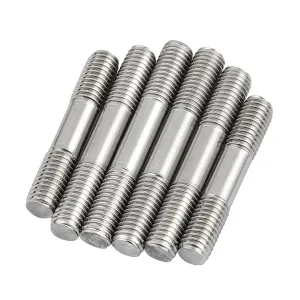
Studs b7
Category: Studs b7Browse number: 383Number:Release time: 2026-07-21 11:32:04Port:Port NINGBO Payment Terms:L/C,D/A,D/P,T/T -
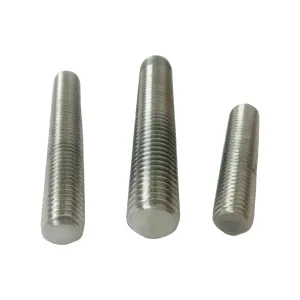
Studs b7
Category: Studs b7Browse number: 370Number:Release time: 2026-07-21 11:34:12Port:Port NINGBO Payment Terms:L/C,D/A,D/P,T/T -
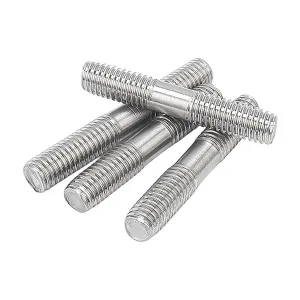
Studs b7
Category: Studs b7Browse number: 370Number:Release time: 2026-07-21 11:38:49Port:Port NINGBO Payment Terms:L/C,D/A,D/P,T/T
News
Category:
No search results found!
Case
Category:
No search results found!
Video
Category:
No search results found!
Download
Category:
No search results found!
Job
Category:
No search results found!
Featured Products
No search results found!



 WhatsApp
 Phone
Phone