

Stainless Steel bolt Selection Guide: Material Grades, Corrosion Resistance, and Industrial Applications
Selecting the correct Bolt material is a critical decision for industrial equipment manufacturers, engineering contractors, and technical purchasing teams. In applications exposed to moisture, chemicals, outdoor environments, or demanding operating conditions, stainless steel bolts provide important advantages through corrosion resistance, durability, and stable performance.
However, not every stainless steel Bolt is suitable for every application. Different material grades, surface treatments, mechanical properties, and manufacturing processes influence final performance. A professional selection process requires evaluating environmental conditions, load requirements, standards, and supplier manufacturing capability.
This guide explains how technical buyers can evaluate stainless steel Bolt solutions, including material selection, corrosion resistance, specifications, quality verification, and industrial applications.
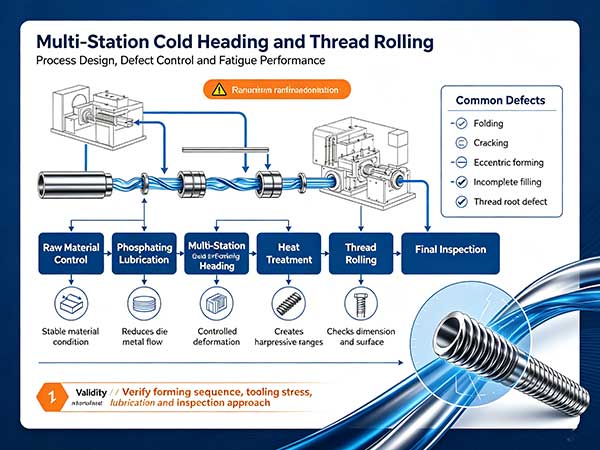
Industrial fastening systems often operate in environments where ordinary fasteners may experience corrosion, reduced strength, or premature failure. Stainless Steel Bolts are commonly selected when improved corrosion resistance and long-term durability are required.
Typical advantages of stainless steel Bolts include:
Strong corrosion resistance
Good surface stability
Long service life in demanding environments
Suitable performance in outdoor applications
Compatibility with various industrial systems
Industries using stainless steel fasteners include:
New energy equipment
Automotive systems
Construction machinery
Chemical equipment
Environmental protection systems
Building structures
Before purchasing stainless steel Bolts, buyers should define complete technical requirements. Missing information may lead to unsuitable products, incorrect quotations, or delays during production.
| Specification | Example Requirement | Why It Matters |
|---|---|---|
| Product Type | Stainless steel Hex bolt | Defines fastening structure and application method |
| Material | Stainless steel 904L | Determines corrosion resistance and performance |
| Size | M3-160, Non Standard | Ensures equipment compatibility |
| Surface Treatment | Plain, Passivation | Affects surface protection and appearance |
| Grade | A2-70, A4-70, A4-80, etc. | Defines mechanical properties |
| Standard | DIN, ANSI, GB, Non Standard | Ensures engineering compatibility |
The material grade of a stainless steel Bolt directly affects corrosion resistance, mechanical performance, and application suitability. Technical buyers should understand the differences between available grades before selecting products.
A2 stainless steel grades are commonly used for general industrial applications where moderate corrosion resistance is required.
Typical applications include:
General machinery assembly
Indoor equipment installation
Standard industrial fastening systems
A4 stainless steel grades are generally selected for more demanding environments where improved corrosion resistance is required.
Common application areas include:
Marine-related equipment
Chemical environments
Outdoor industrial systems
High humidity applications
904L stainless steel is known for high corrosion resistance characteristics and is often considered for applications requiring enhanced protection against aggressive environments.
Stainless steel 904L hex Bolt products can be customized according to engineering requirements, including different dimensions, standards, and application specifications.
Corrosion resistance is one of the most important factors when selecting stainless steel Bolts. Different working environments create different levels of corrosion risk.
| Environment | Main Challenge | Selection Consideration |
|---|---|---|
| Outdoor Construction | Rain, humidity, temperature changes | Choose suitable stainless steel material and surface treatment |
| Chemical Industry | Exposure to corrosive substances | Evaluate material compatibility carefully |
| Marine Environment | Salt and moisture exposure | Require stronger corrosion resistance |
| Industrial Equipment | Vibration and contamination | Balance corrosion and mechanical requirements |
Surface treatment influences corrosion protection, appearance, and long-term surface performance. Stainless steel Bolt products may use different finishing methods depending on application requirements.
Plain surface treatment maintains the natural surface condition of stainless steel and is suitable for applications where additional coating is not required.
Passivation improves the protective oxide layer on stainless steel surfaces, helPing maintain corrosion resistance performance.
For technical procurement, buyers should confirm surface treatment requirements before production to ensure compatibility with the application environment.
Although corrosion resistance is one of the main advantages of stainless steel Bolts, mechanical performance remains a key consideration for industrial applications. Technical buyers must ensure that the selected Bolt can withstand required loads while maintaining reliable fastening performance.
Mechanical performance is influenced by:
Material composition
Bolt grade
Manufacturing process
Thread quality
Heat treatment requirements
Application loading conditions
Stainless steel Bolt grades indicate important mechanical characteristics. Different grades provide different combinations of strength, corrosion resistance, and application suitability.
| Bolt Grade | Main Characteristics | Typical Applications |
|---|---|---|
| A2-70 | General stainless steel fastening performance | General industrial equipment and machinery |
| A4-70 | Improved corrosion resistance performance | Outdoor and demanding industrial environments |
| A4-80 | Higher mechanical performance requirements | Heavy-duty applications requiring stronger fastening capability |
Selecting a Bolt grade requires balancing environmental conditions and mechanical requirements. Choosing a higher grade does not always mean better performance if the application requirements do not require it.
Technical buyers should evaluate:
Operating environment
Required corrosion resistance
Applied loads
Temperature conditions
Maintenance expectations
| Application | Recommended Consideration |
|---|---|
| General Equipment Assembly | Evaluate standard stainless steel grades based on load requirements |
| Outdoor Machinery | Prioritize corrosion resistance and surface protection |
| Chemical Equipment | Consider material compatibility with chemical exposure |
| Heavy Industrial Systems | Balance strength, durability, and environmental resistance |
Stainless steel Bolts are used across multiple industries because they provide reliable fastening performance in challenging environments. The correct product selection depends on equipment design, operating conditions, and required service life.
New energy systems often require fasteners that can maintain performance during long-term outdoor operation. Stainless steel Bolts are commonly considered for equipment exposed to humidity, temperature changes, and environmental conditions.
Important selection factors include:
Corrosion resistance
Long-term stability
Installation reliability
Maintenance requirements
Automotive manufacturers require fasteners with consistent dimensions and reliable mechanical performance. Stainless steel Bolts may be used in specific vehicle components and industrial equipment where corrosion resistance is important.
Key requirements include:
Stable quality consistency
Accurate dimensions
Reliable supply capability
Controlled manufacturing processes
Construction machinery operates under vibration, impact, and harsh outdoor conditions. Stainless steel Bolts used in these applications must be selected according to load requirements and environmental exposure.
Important considerations include:
Thread performance
Mechanical strength
Vibration resistance
Corrosion protection
Equipment used in chemical and environmental industries may face aggressive operating conditions. Material selection becomes especially important because corrosion can affect both equipment safety and maintenance costs.
The reliability of a stainless steel Bolt depends not only on material selection but also on manufacturing process control. Professional suppliers use multiple quality management methods to ensure consistent production performance.
Cold heading is commonly used for efficient Bolt forming. The process requires accurate control of material flow, deformation ratio, and tooling conditions.
Quality control points include:
Raw material consistency
Multi-stage forming design
Tooling condition
Dimensional verification
Thread rolling affects Bolt assembly performance and long-term reliability. Controlled thread production helps improve dimensional accuracy and surface quality.
Inspection may include:
Thread measurement
Thread profile verification
Surface inspection
Production monitoring
A complete inspection system helps identify potential defects before products are delivered.
| Inspection Method | Purpose |
|---|---|
| Dimensional Inspection | Confirm Bolt size accuracy |
| Thread Inspection | Verify assembly compatibility |
| Optical Sorting | Improve high-volume inspection efficiency |
| Eddy Current Inspection | Detect certain surface defects |
Choosing a stainless steel Bolt Supplier requires evaluating production capability, quality management, and technical support. A supplier should be able to provide consistent products rather than only competitive pricing.
Important supplier evaluation points include:
Experience with stainless steel fasteners
Ability to support custom specifications
Quality inspection capability
Production traceability management
Technical communication ability
When purchasing stainless steel Bolts, technical buyers should evaluate total cost rather than focusing only on the initial unit price. The real value of a Bolt solution depends on material quality, manufacturing stability, service life, maintenance requirements, and supplier reliability.
Several factors influence stainless steel Bolt costs:
| Cost Factor | Impact on Purchasing |
|---|---|
| Raw Material Grade | Higher corrosion-resistant materials usually require greater material investment |
| Production Process | Cold heading, thread rolling, and precision requirements affect manufacturing cost |
| Customization Requirements | Non-standard dimensions may require additional tooling and engineering support |
| Inspection Requirements | Critical applications may require additional testing procedures |
| Packaging and Logistics | International transportation and protection requirements influence final cost |
Selecting the cheapest stainless steel Bolt supplier may create long-term risks if product quality, material consistency, or inspection procedures are insufficient.
A failed fastener can result in:
Unexpected equipment downtime
Additional maintenance costs
Production delays
Safety risks
Replacement expenses
For industrial applications, reliable quality and stable supply are often more valuable than short-term price savings.
China has become a major manufacturing center for industrial fasteners, offering extensive production capability, customization options, and competitive supply chain advantages.
However, international buyers should carefully evaluate suppliers before establishing cooperation. A reliable manufacturer should provide technical support, quality documentation, and stable production management.
| Supplier Evaluation Item | Buyer Consideration |
|---|---|
| Manufacturing Experience | Does the supplier understand industrial fastener applications? |
| Material Management | Can the supplier provide material traceability? |
| Production Equipment | Are forming and thread processing capabilities available? |
| Quality System | Are inspection procedures clearly controlled? |
| Customization Support | Can the supplier manufacture according to drawings? |
A professional stainless steel Bolt manufacturer can help customers optimize product selection by providing engineering recommendations and customized solutions.
Benefits may include:
Customized dimensions
Technical drawing review
Stable production quality
Flexible order quantities
Long-term supply cooperation
Many purchasing problems occur because buyers focus only on product specifications while ignoring application conditions and supplier capability.
| Common Mistake | Potential Problem | Better Solution |
|---|---|---|
| Selecting Material Only by Appearance | Different stainless steel grades may have different performance | Verify material specifications and application requirements |
| Ignoring Corrosion Environment | Fastener life may be reduced | Evaluate exposure conditions before selection |
| Choosing Only Low Price | May increase failure and replacement risks | Compare quality, process control, and supplier capability |
| Missing Technical Information | Incorrect product delivery | Provide complete drawings and specifications |
| Ignoring Traceability | Difficult quality analysis | Select suppliers with documented production control |
Before placing a stainless steel Bolt order, buyers should confirm the following information:
✔ Required stainless steel material grade
✔ Bolt size and thread specification
✔ Required strength grade
✔ Applicable manufacturing standard
✔ Surface treatment requirements
✔ Operating environment conditions
✔ Load and vibration requirements
✔ Inspection and documentation requirements
✔ Packaging and delivery requirements
✔ Supplier production capability
The main advantage of stainless steel Bolts is their corrosion resistance and durability, making them suitable for applications where environmental exposure may affect standard fasteners.
904L stainless steel is considered for applications requiring enhanced corrosion resistance. The suitability depends on the specific operating environment and engineering requirements.
The choice depends on corrosion exposure, mechanical requirements, and application conditions. A4 grades are generally selected for more demanding environments requiring stronger corrosion resistance.
Yes. Stainless steel Bolts can be manufactured according to customer drawings, dimensions, standards, and special application requirements.
Buyers should provide Bolt type, material, size, quantity, standard, surface treatment, application environment, and technical drawings if available.
Choosing the correct stainless steel Bolt requires a complete understanding of material performance, corrosion resistance, mechanical requirements, manufacturing quality, and application conditions.
For industries including construction machinery, automotive equipment, new energy systems, and industrial manufacturing, reliable fasteners play an essential role in ensuring safe and stable operation.
A professional purchasing strategy should evaluate supplier capability, product quality, and long-term value instead of focusing only on initial cost. By selecting the right stainless steel Bolt solution, companies can improve equipment reliability, reduce maintenance requirements, and achieve better operational performance.
For more information about industrial fastener products and customized Bolt solutions, visit:
Contact person: Mr.Ren
Phone:0086-13958324455
Customer service: +86-0574 88065928
Email: Sales@zjbzj.com
Fax: +0086-0574 88065656

official website
Copyright @ Ningbo yi teng construction machinery CO,LTDmainly engaged in Blade Bolts Series, Hexagon bolt, and Bucket teeth. Welcome to inquire!
SitemapThis website uses cookies to ensure you get the best experience on our website.
 Español
 Portugues
 Pусский
 Français
 Deutsch
 日本語
日本語 한국어
한국어 العربية
 हिन्दी



 WhatsApp
 Phone
Phone
Comment
(0)